
‘Sifted flour’ and ‘wholemeal flour’ are terms we often hear, but what do they actually mean – and how do they affect baking?
Sifted flour: Sifting is a milling process in which the coarser parts of the wheat grain – namely the bran and the germ – are sifted away. What remains is the endosperm, the inner, starch-rich part of the grain. Sifted flour is lighter in colour and often has a milder flavour. The bread is generally lighter and rises better.
Strong Bread Wheat Flour is a fine, sifted flour that is also one of our most popular flours. It is rich in spring wheat and has a higher protein and gluten content, resulting in classically elastic doughs and wonderfully fluffy bread.

Extra Strong Bread Wheat Flour – a popular sifted flour that gives good volume.
If you’d prefer a slightly coarser stone-ground flour, try Strong Bread Wheat Flour Stone-Ground.
Wholemeal flour: Unlike sifted flour, where the bran and germ are removed, wholemeal flour consists of the whole grain. The husk, endosperm and germ are ground together into the flour. This gives a rich, earthy flavour and a coarse, robust texture.
Wholemeal flour is also rich in fibre, vitamins and minerals from the whole grain. When you bake with wholemeal flour, you get a darker, denser and more flavourful result – perfect for rustic sourdough bread.
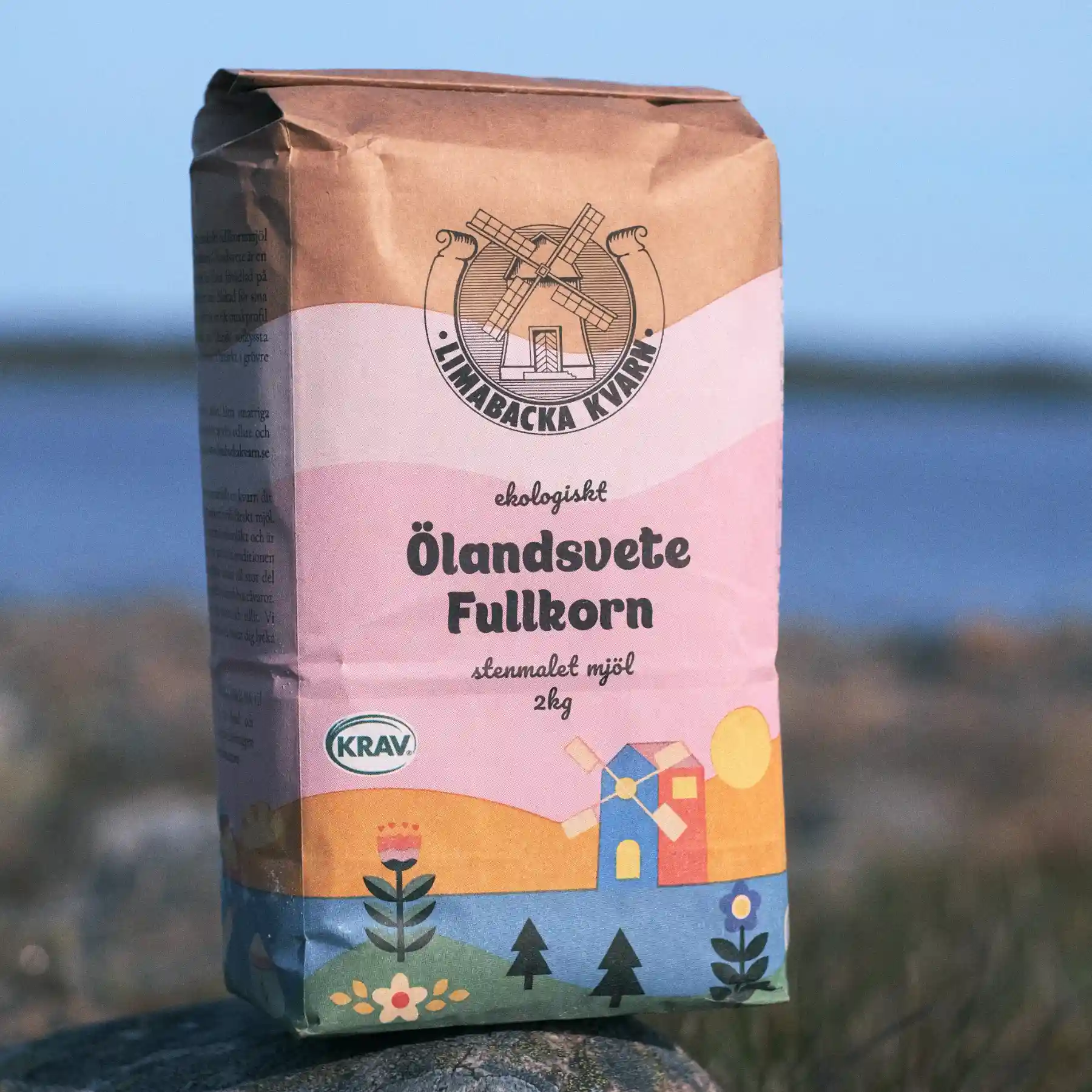
Öland Wheat – a stone-ground wholemeal flour that gives the bread character and depth of flavour.