
What an exciting topic! These distinctive, nutritious and flavourful grains can both challenge the baker and take baking to new heights. Let’s take a closer look at heritage varieties, landrace wheats and heritage grains!
If you bake with heritage grains, you not only get bread with a richer and deeper flavour compared to modern wheat varieties, you also contribute to organic and sustainable farming. Get ready to fall in love with these proud old grains.
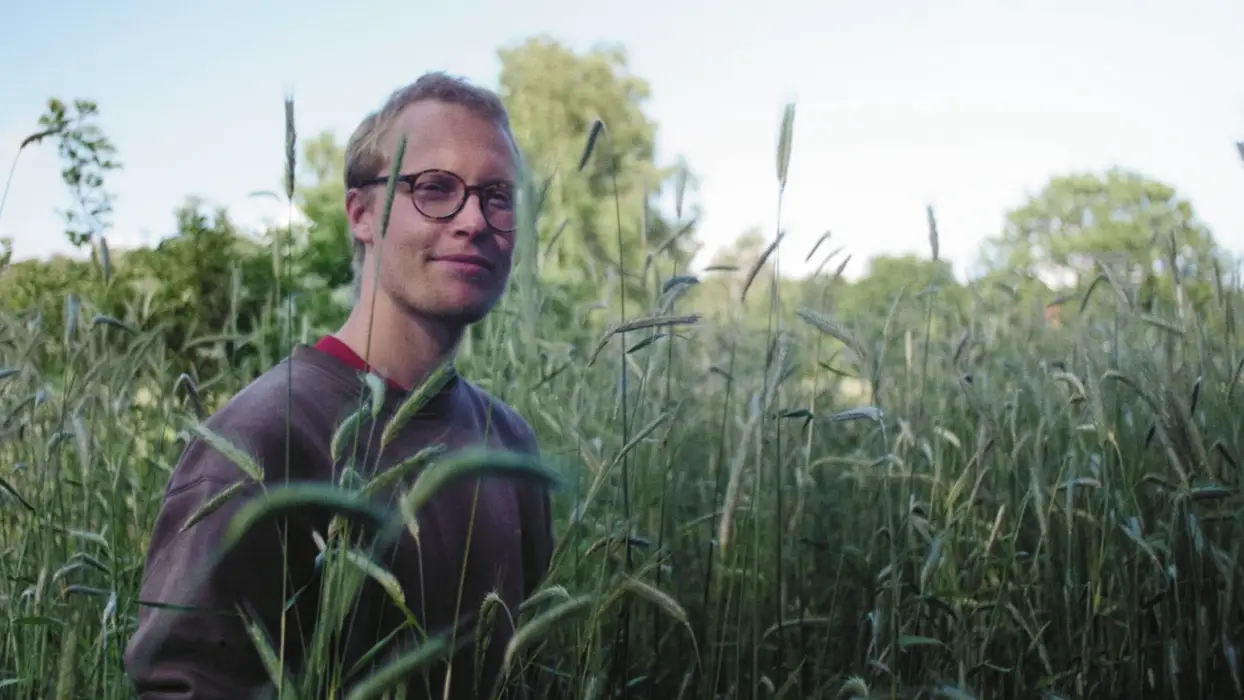
The tall heritage variety Swidden Rye grows on the farm of our organic grower Linus Källgård on the Värö Peninsula, a stone’s throw from the mill.
Heritage varieties and heritage grains are umbrella terms referring to older cereal varieties which, unlike more modern grain varieties, have not been bred or manipulated for higher yields and profitability. These heritage varieties – often tall, robust and nutritious – have therefore retained their original characteristics from long ago, often thousands of years ago.
Examples of heritage grains include emmer wheat and einkorn, the two oldest domesticated wheat varieties. They have been part of the human diet for thousands of years and date back to the origins of agriculture. They played a crucial role when our ancestors transitioned from life as hunters and gatherers to a more settled existence as farmers.

Einkorn from Gotland. Einkorn is the oldest variety of wheat and produces a beautiful yellowish flour.
Einkorn is the oldest variety of wheat known to us. It has a pleasant yellow colour and produces bread with a rich, nutty flavour. Einkorn contains more protein than modern wheat varieties, but generally has a weaker gluten structure.
A much-loved heritage grain is the flavourful and protein-rich spelt; a wheat variety over 5,000 years old that was likely the result of emmer being crossed with three-toothed bristle wheat. Spelt flour gives the bread a rich flavour and a darker hue.
Another favourite of ours at the mill is Swidden Rye; a robust and nutritious grain with ears that often grow over two metres tall. Swidden Rye, also known as midsummer rye, is prized for its rich yet mild flavour and has been grown in Sweden since the 17th century.
To understand Swidden Rye, we must hop into a time machine and return to the late 16th and early 17th centuries, where we meet the Forest Finns. It was, in fact, through their migration that Swidden Rye came from Finland to Sweden.
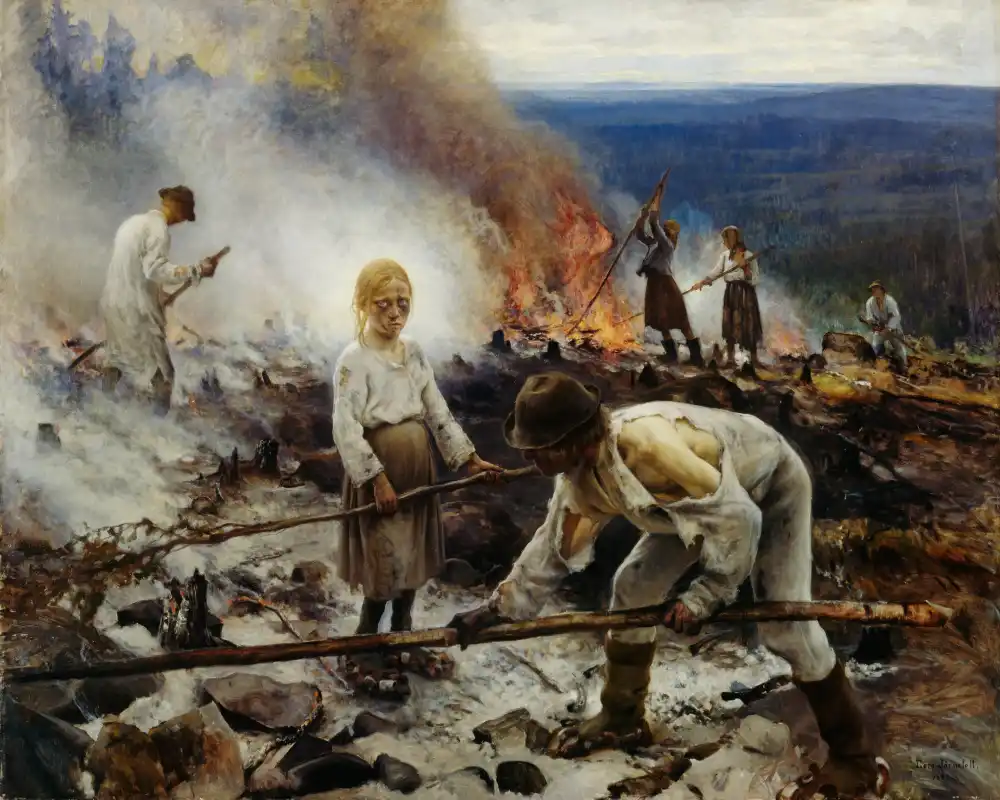
Painting of slash-and-burn farming by the Finnish artist Eero Järnefelt (1863–1937). "Raatajat rahanalaiset eli Kaski", from 1893.
Swidden Rye has a growing season of 14 months and is usually planted just after Midsummer. It begins to sprout and develop during the warm summer months, only to be harvested the following autumn.
During the winter months, the rye regains its strength and the original stalk begins to branch out, creating four to five individual stalks. During the following summer, the rye grows tall, dense and robust – and the ears fill to the brim. Once the rye has matured, which normally occurs around the end of August or beginning of September, the Swidden Rye is ready for harvest.
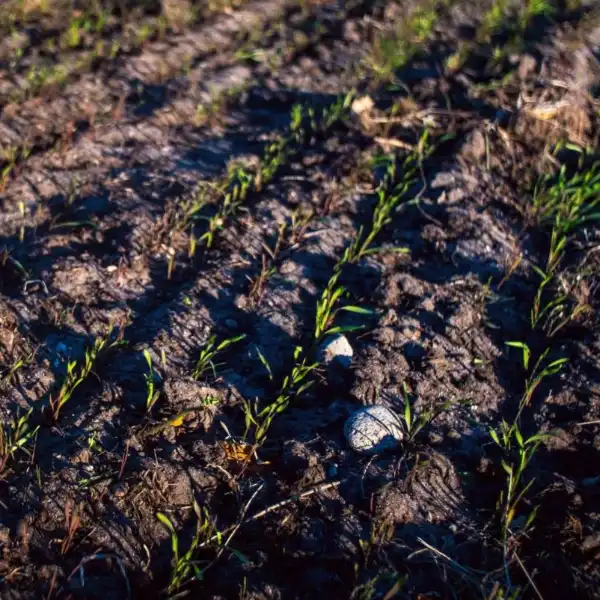
Swidden Rye grows in the autumn and is harvested the following year.
There are many reasons to fall in love with heritage grains. In addition to their robust and deep flavours and rich history, heritage varieties are real toughies that were developed to grow and thrive in varied and sometimes hostile environments, without the help of industrial agricultural techniques, artificial fertilisers or pesticides.
Heritage varieties generally yield smaller harvests but are, in return, resistant to pests and weather conditions, making them a reliable and robust choice for growers. They are often tall and vigorous, with long stalks and deep root systems that can compete with weeds for water and sunlight – and are therefore well suited to organic farming.
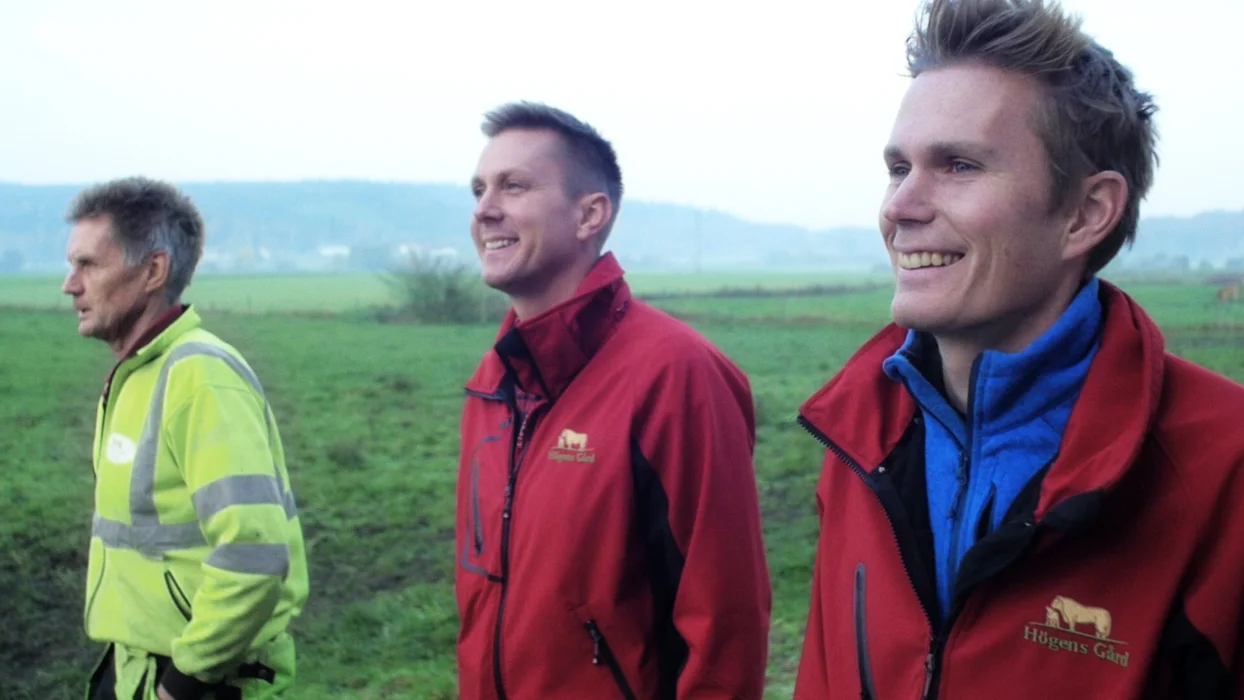
Håkan with his sons Christian and David at Högens Gård in Halland, where they grow spelt for us at the mill.
Landrace wheats are the wheat varieties that were once grown – using traditional farming techniques – throughout Sweden. These landraces adapted to the local soil and climate where they grew, and thus developed unique nutritional profiles, flavours and baking properties, making them very exciting to bake with! Among the best known are Halland Wheat and Öland Wheat.
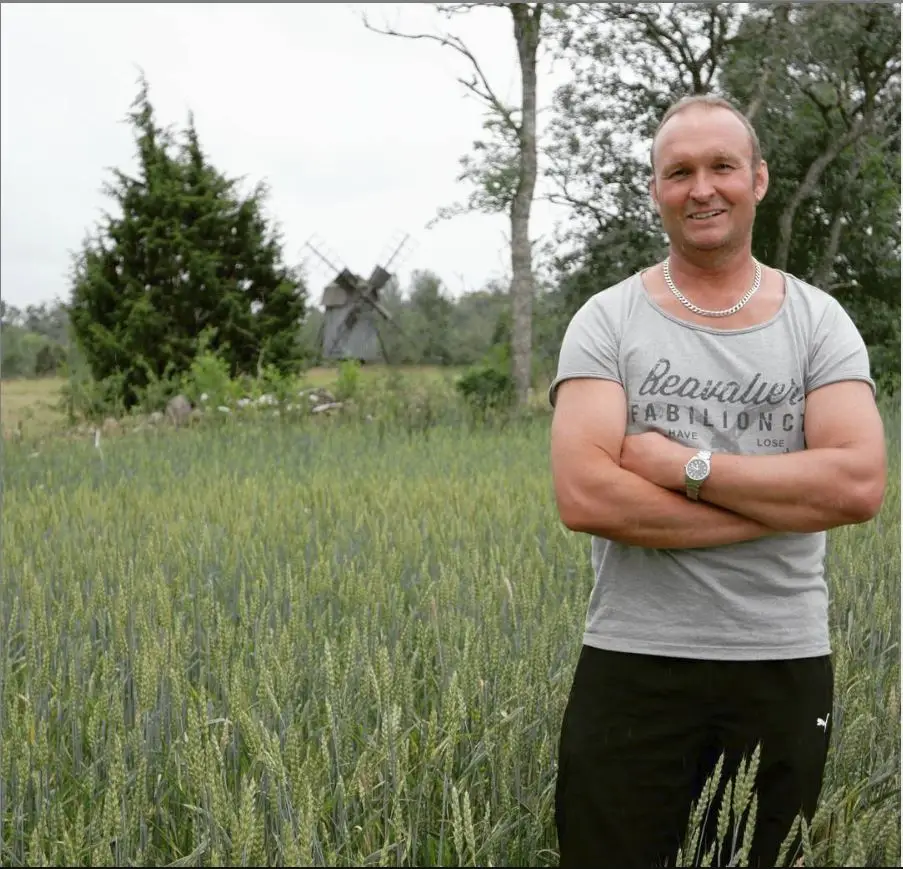
Öland Wheat from our organic grower Greger on Öland. In the background, you can see the windmill in Vedby.
What these old landraces and heritage varieties have in common is that they generally contain more protein, as well as more minerals and vitamins, compared to modern varieties. They also give us an insight into our own history and allow us to reconnect with old Swedish baking traditions – something we find really fun and interesting.
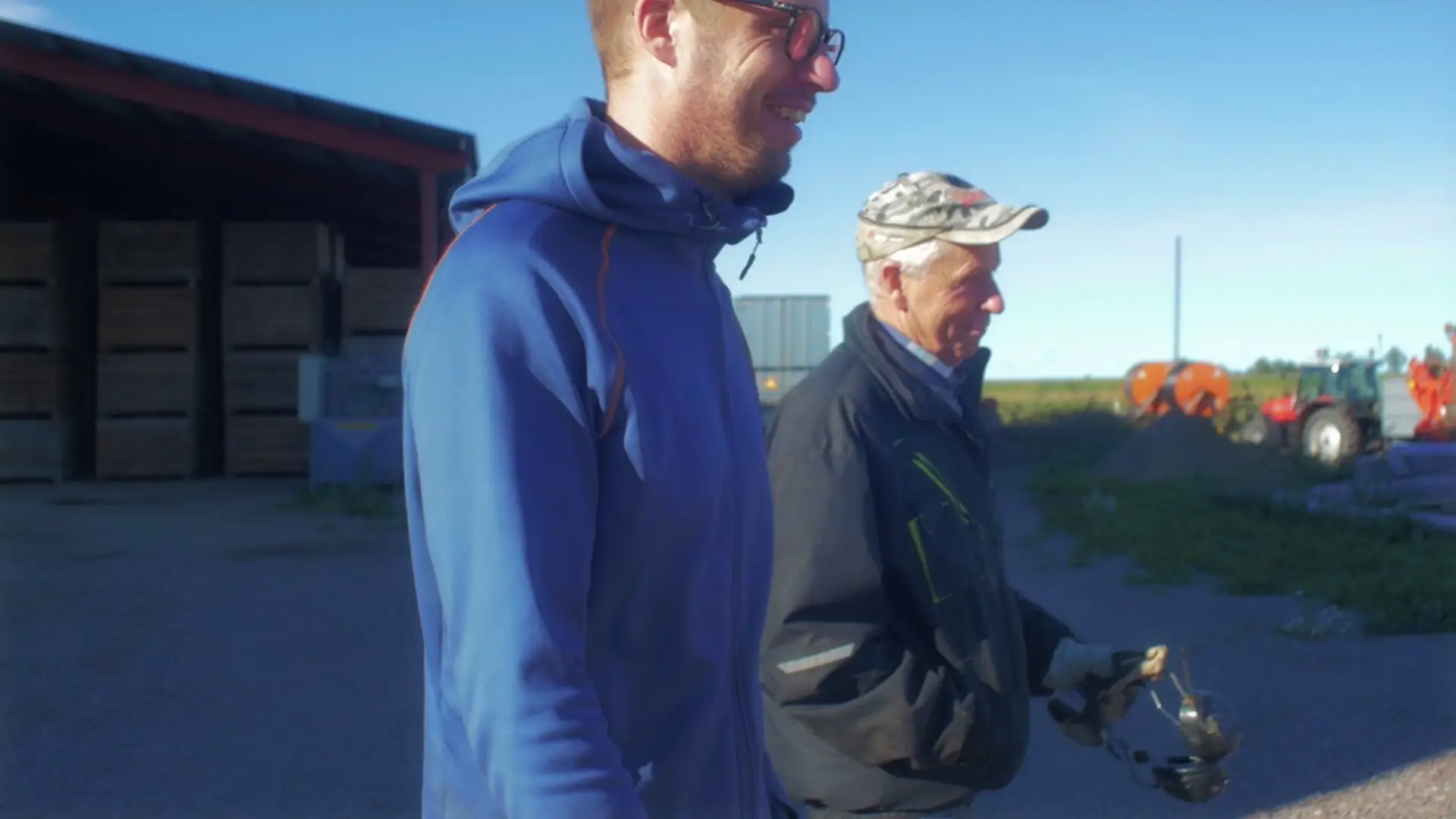
High-tech and organic farming at Adam Paulsson’s in Motala.
As interest and awareness of nutritious diets, organic food and sustainable farming grew, there was a resurgence in interest in the old heritage varieties. It was discovered that heritage grains contained more nutrients, gave the bread richer flavours and were a natural part of small-scale, sustainable farming.
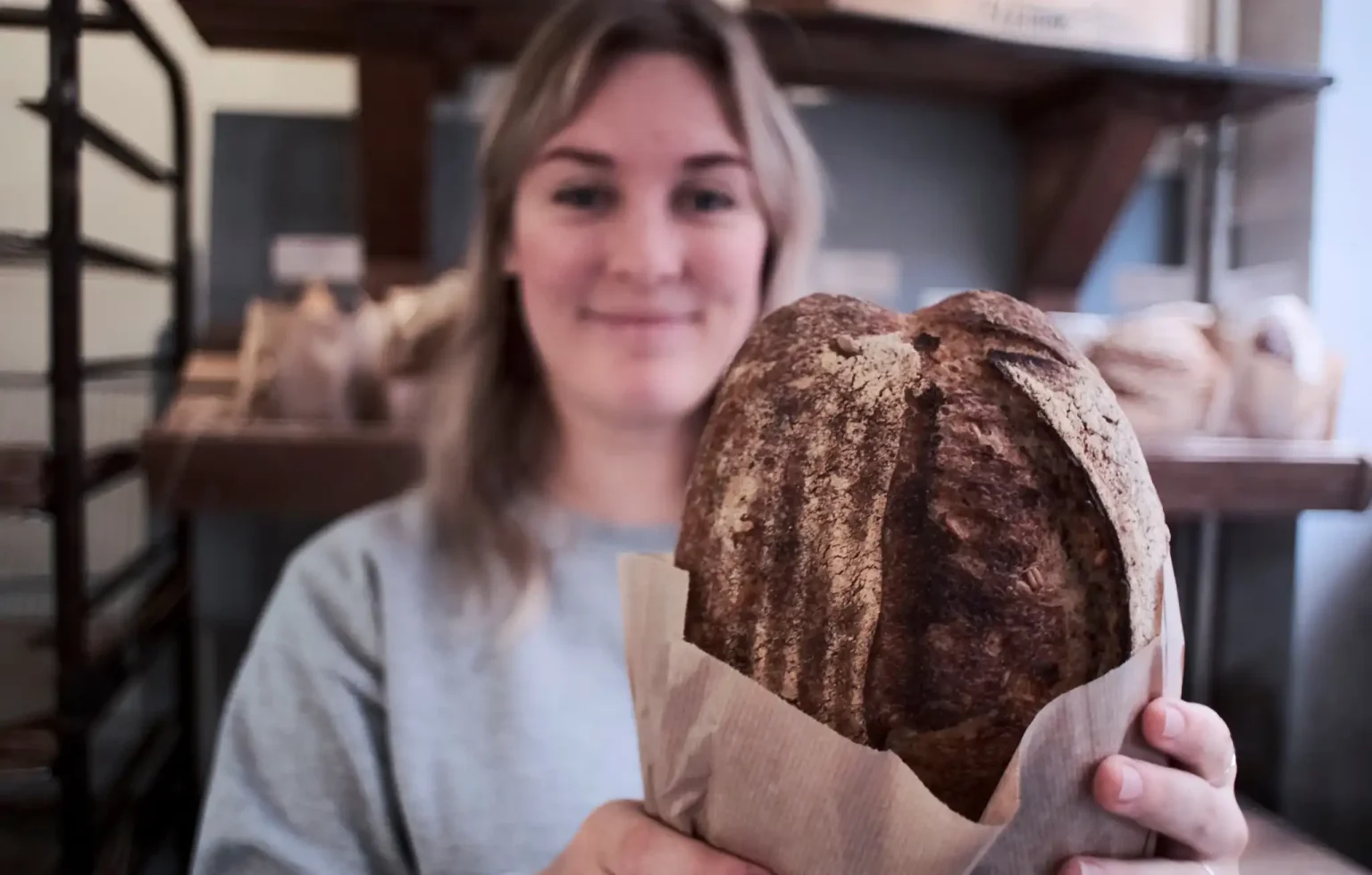
Our friends at Da Matteo in Gothenburg bake using organic heritage grains from Limabacka Kvarn.