
Fortunately, rye is enjoying a renaissance. More and more professional and home bakers are rediscovering rye’s distinctive character – its deep flavour, moist texture and nutritional value – qualities that make it perfect for sourdough baking.

Our beloved rye flour.
Baking with rye flour differs from wheat flour in several ways. Wheat flour contains more gluten-forming proteins, which give the dough elasticity and volume. Rye flour, on the other hand, has less gluten and a higher content of pentosans – carbohydrates that bind a lot of liquid and give the dough a stickier consistency. This makes rye doughs more difficult to handle, but results in bread that is dense, moist and full of flavour.
Baking with rye flour requires a little patience, but the reward is great. Rye flour produces bread with a rich aroma, dark colour and long shelf life. Compared to wheat bread, you get a more compact and moist result – perfect for heartier breads such as Danish rye bread or sourdough loaves.
You can also mix rye flour with wheat flour to balance the properties of the two grains. The wheat flour contributes structure and volume, whilst the rye flour adds flavour and moistness. Many bakers use this combination when they want to create bread with character yet a light crumb.
We offer several types of rye flour – from aromatic Swidden Rye flour to coarse stone-ground wholemeal rye flour. Experiment and find your favourite!
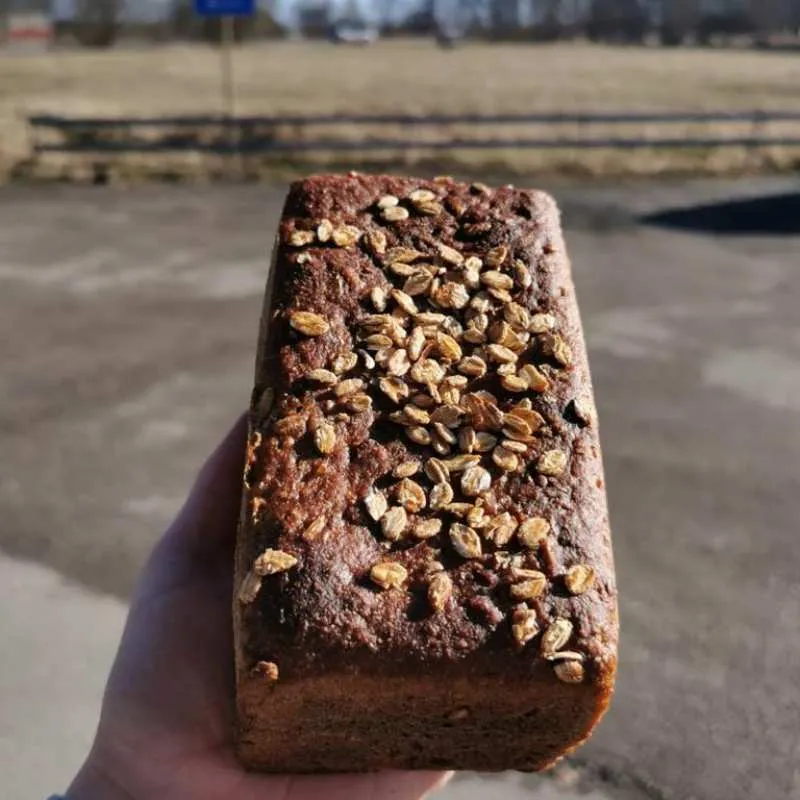
A coarse Danish rye bread.
Tip: For extra moist bread – let the rye dough rest for longer and feel free to use sourdough as a leavening agent. It enhances the flavour and makes the bread keep longer.