
Baking with heritage grains and landrace wheat is fun, interesting and challenging! Not only does it give your bread a deeper and more complex flavour, but it also provides a deeper understanding of the history and traditions of baking.
Heritage grains were developed and adapted to the soil in which they grew, and to the traditional farming methods used in that particular area. That is why every heritage grain and landrace variety has its own unique baking characteristics, nutritional profile and flavour. They are often distinctive, flavourful and headstrong – in a way that both challenges the baker and takes baking to the next level.
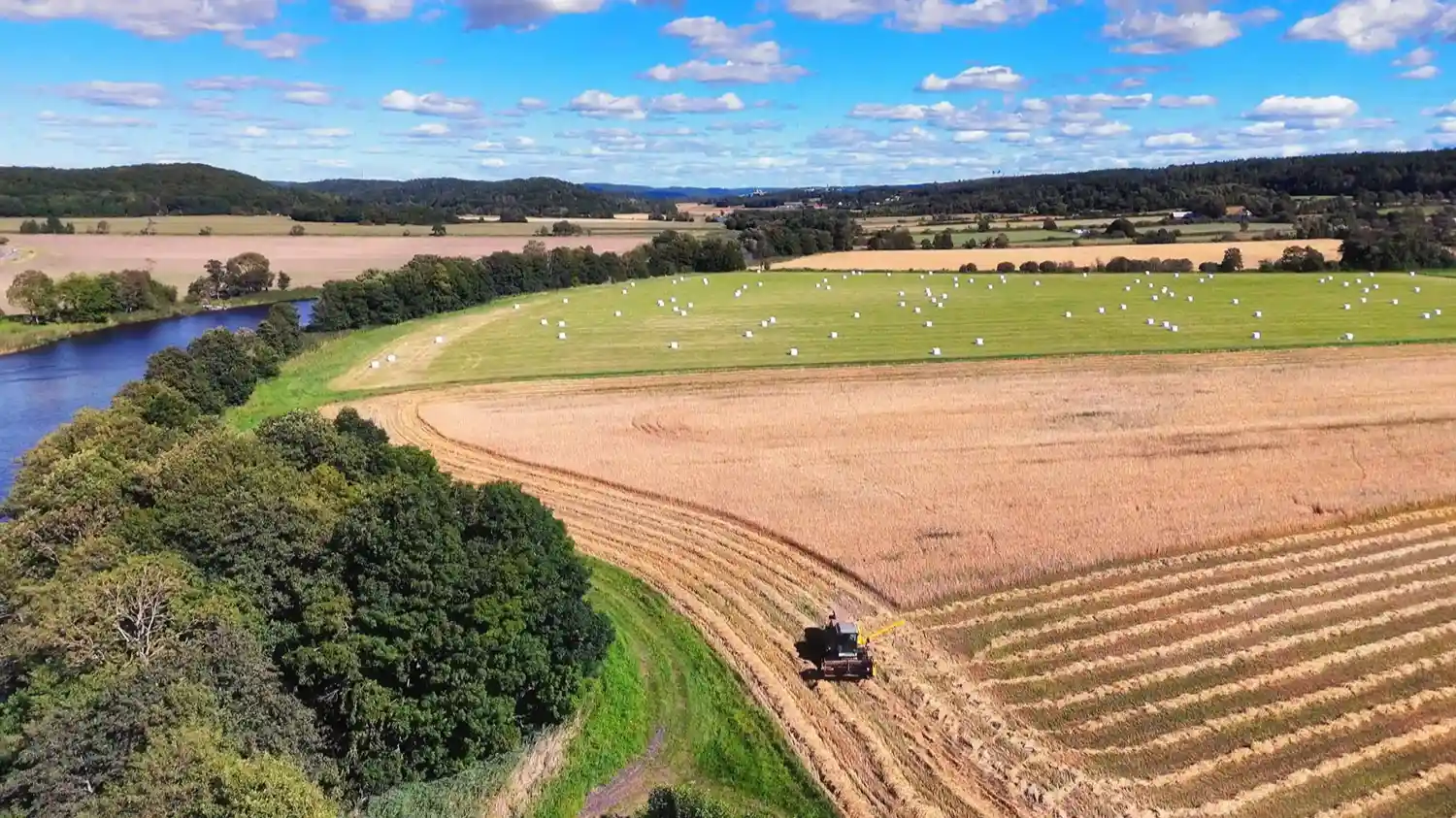
Halland Wheat grows along the Viskan river, a stone’s throw from the mill.
When we bake with heritage grains and landrace wheat, we move closer to nature and our origins. We must accept that the flour, like nature, is changeable and sometimes capricious. It is not a given that the dough will behave exactly as it did last time – that is why we as bakers must be attentive and use our senses: look, smell, taste, feel and listen.
No two heritage grains are alike. They differ in aroma, appearance and taste. Some have wonderfully beautiful hues, such as the fragrant purple emmer wheat and the golden einkorn with its rich, nutty flavour.
So how do you actually bake with heritage grains and landrace wheat?
It depends on what you want to achieve with your bread or baked goods. If you’re looking for a more authentic, traditional flavour and texture, you can choose to use only flour from heritage grains. This gives the bread a strong impression of the flour’s unique character.
If, on the other hand, you want to add a hint of that flavour whilst retaining some predictability in the dough, you can mix flour from heritage grains with ordinary wheat flour. This makes the dough easier to work with, whilst still giving you a hint of the original flavour.
A good way to start is to mix around 30% heritage grain flour and 70% standard flour, and then adjust according to taste and experience. For example, you could try 60–70% Strong Bread Wheat Flour to achieve good volume, and mix it with 30–40% of your choice of heritage wheat.
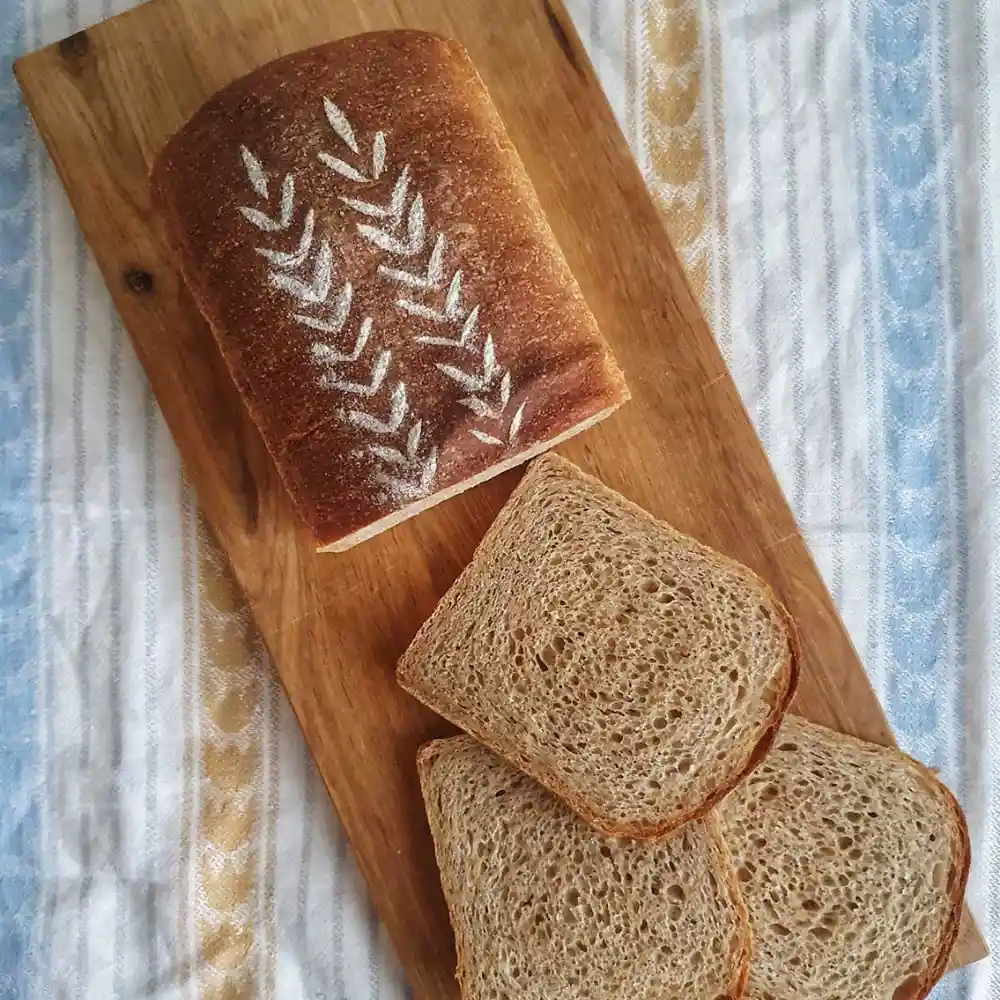
A delicious loaf made with Öland Wheat and Strong Bread Wheat Flour from our baker Sara Rynningsjö.
Heritage grains and landrace wheat are ideal for sourdough baking. The sourdough gives the bread a fantastic depth of flavour and helps to bring out the unique notes in these traditional grains.
When we talk about landrace wheat, we must also talk about protein. Many heritage grains have a higher protein content than modern wheat varieties, but a weaker gluten structure. This means that the breads often turn out more flavourful and rustic – rather than light and airy.

Felicia Garelick at Vilgots Surdegsbageri in Växtorp bakes using Swidden Rye Stone-Ground Wholemeal Flour.
A favourite among heritage grains is spelt – a protein-rich flour that often gives a moist crumb and a nutty flavour. Spelt can sometimes resemble modern wheat, but it has a life of its own in the dough and reacts in its own way. That’s why you shouldn’t simply replace wheat flour with spelt, but experiment and get to know the difference.
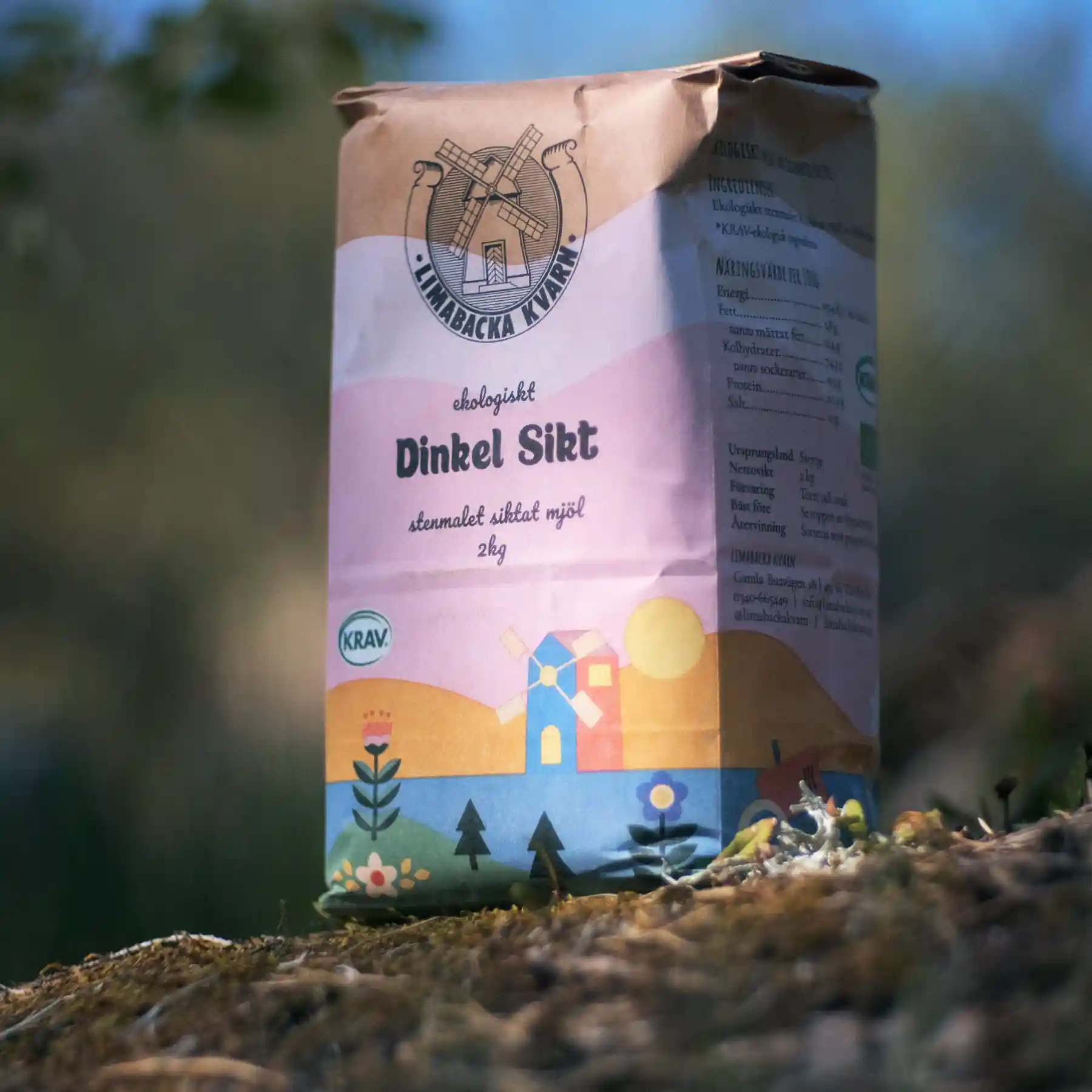
A heritage grain favourite! Spelt Sifted Flour, grown at Högens Gård in Halland.
Purple wheat also has a high protein content but a weaker gluten structure compared to modern wheat. Emmer wheat is similarly protein-rich but has slightly stronger gluten than einkorn. Both produce bread with a denser texture and a deep, complex flavour.
Baking with these flours may require more patience, but the result is unique. As you get to know the character of the flour, you will understand how each dough behaves – and why it is worth the effort.
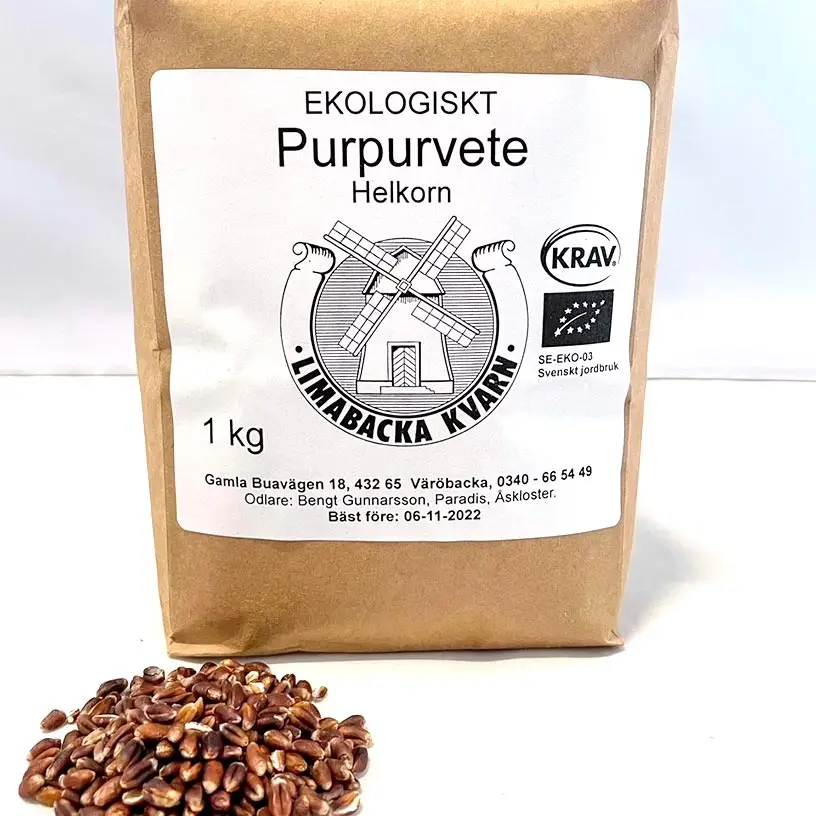
Purple wheat – one of our most colourful and flavourful heritage grains.
Baking with heritage grains sometimes requires experimentation, but that is also part of the joy. Once you learn how these flours behave in the dough and affect the flavour, you will be able to create fantastic breads with both history and soul.
And don’t forget – baking is all about learning by doing. Don’t be afraid to experiment and have fun along the way!
There’s nothing more satisfying than baking your own bread from scratch, especially with these traditional and flavourful heritage grains. Good luck on your baking journey with heritage grains!